
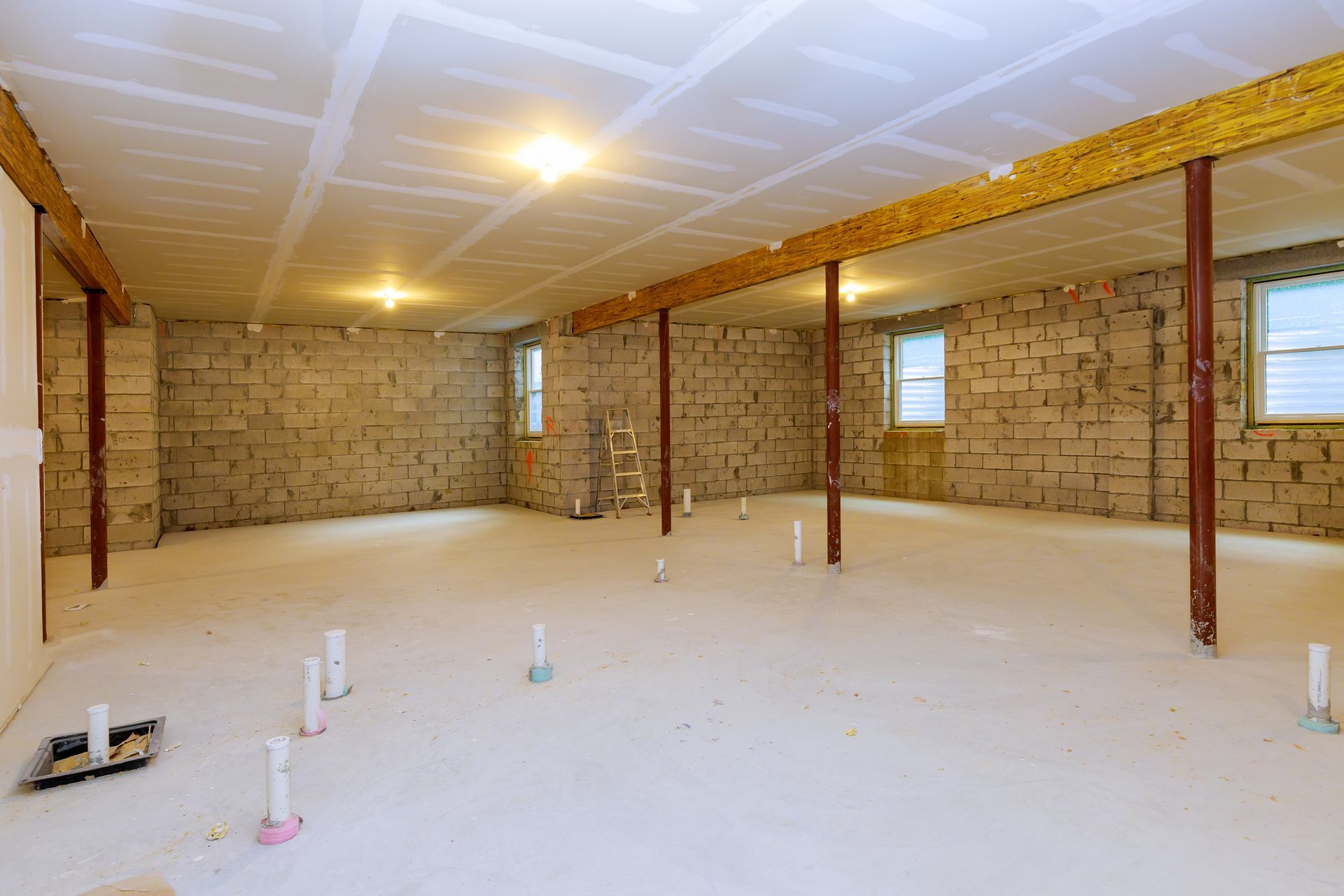
Foundations That Handle Frost Depth Requirements
Basement Concrete in Orion for properties requiring 48-inch frost protection and vapor barriers against groundwater pressure
In Orion and the Quad Cities, basement foundations must meet 48-inch frost depth requirements to prevent heave and settling as the ground freezes and thaws. West Concrete installs basement foundations engineered to handle these conditions, with proper subgrade preparation, vapor barriers, and drainage grading that prevent water intrusion and structural failure down the line. You're dealing with below-grade concrete work where shortcuts lead to costly repairs, so the installation has to account for seasonal groundwater pressure and frost movement from the start.
The process begins with excavating to the correct depth, compacting the gravel base to prevent settling, and installing a vapor barrier before the pour to block moisture from migrating up through the slab. The concrete is finished with a slope that directs water toward drains and away from the foundation walls, and control joints are cut to manage cracking as the concrete cures and the structure settles.
Request a property evaluation to review your basement foundation requirements and site drainage conditions.
How Basement Work Addresses Frost and Moisture
Basement concrete has to perform under conditions that above-grade slabs never see—constant contact with soil moisture, pressure from seasonal groundwater movement, and frost penetration that can crack or shift the foundation if it's not installed deep enough. Proper subgrade prep means removing loose soil, compacting the base in lifts, and confirming that the gravel layer is thick enough to provide drainage and prevent settling. The vapor barrier goes down before the pour to create a continuous moisture barrier between the soil and the concrete.
After the concrete cures, the basement floor will stay dry because the vapor barrier blocks groundwater from wicking up through the slab, and the drainage slope moves any water that does enter toward sumps or drains instead of letting it pool. Frost heave won't shift the foundation because the footings were set below the frost line, and the slab won't crack randomly because control joints were placed to manage where cracks occur.
The finishing work includes grading the surface so that water moves predictably, sealing penetrations where plumbing or utilities enter the slab, and confirming that the vapor barrier wasn't torn or displaced during the pour. These steps prevent the moisture problems that turn basements into storage liabilities instead of usable space.
Answers to Frequent Service Questions
Property owners planning basement work in Orion want to know about frost requirements, moisture barriers, and how the concrete will perform long-term.
Why do basement foundations in Orion require 48-inch frost depth?
Illinois code requires footings to be set below the frost line to prevent heave when the ground freezes—48 inches is the minimum depth that keeps the foundation stable through seasonal freeze-thaw cycles without shifting or cracking.
What does a vapor barrier do in a basement slab?
The vapor barrier blocks moisture from migrating up through the concrete from the soil below, which prevents damp conditions, efflorescence on the surface, and bonding problems if you plan to install flooring or coatings later.
How is the basement floor graded to prevent water pooling?
The slab is poured with a slight slope toward drains or sump locations, typically a quarter inch per foot or less, which moves water predictably without creating a noticeable pitch in the floor.
What happens if the gravel base isn't compacted properly?
Poorly compacted base material settles unevenly after the concrete is poured, which causes cracking, low spots where water pools, and separation between the slab and foundation walls that can lead to structural problems.
When should basement concrete be sealed after installation?
Sealing should happen after the concrete has fully cured and any residual moisture has dried, typically 60 to 90 days after the pour, to avoid trapping moisture inside the slab that can cause bonding failures or surface damage.
West Concrete handles basement foundation work across Orion and the Quad Cities, meeting Illinois frost and moisture standards on every installation. Schedule a consultation to review your basement project and site-specific conditions.