
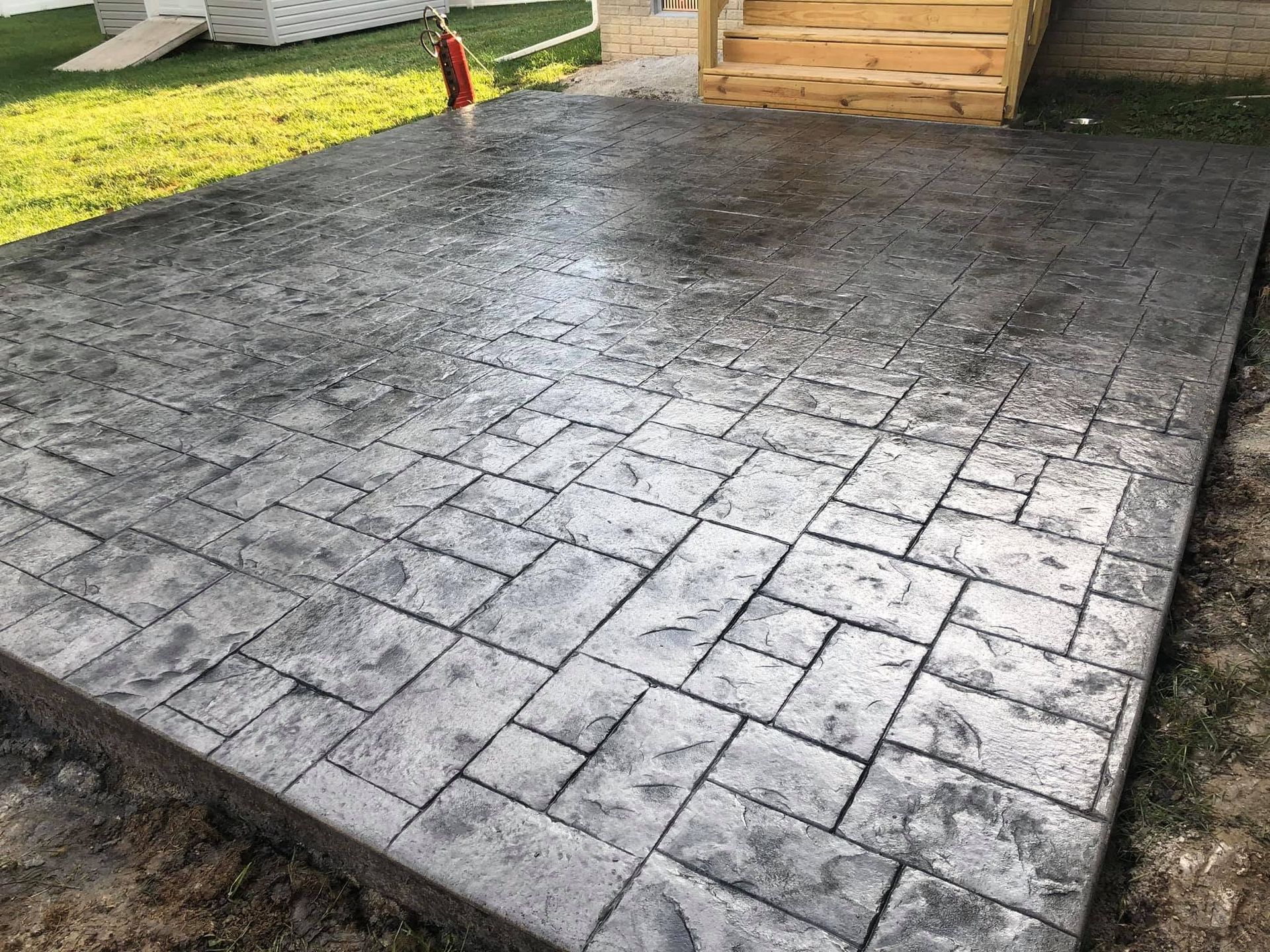
Decorative Surfaces That Withstand Midwest Conditions
Stamped concrete in Orion for driveways, patios, and walkways where pattern definition and color must survive salt exposure and seasonal weather
Stamped concrete combines aesthetics with durability, but the pattern and color only last if the finishing and sealing are done correctly. West Concrete creates decorative stamped surfaces in Orion and the Quad Cities, using integral pigments mixed into the concrete and imprint stamps applied before the slab sets. Multiple seal coats—urethane or epoxy—protect the pattern from road salt, moisture penetration, and freeze-thaw damage that can cause the finish to fade or flake over time.
The concrete is colored during mixing rather than applied as a surface layer, which prevents the pigment from wearing off under traffic. Stamps are pressed into the surface while the concrete is still workable, creating patterns that mimic stone, brick, or tile. After curing, seal coats lock in the color and pattern while blocking moisture and contaminants from penetrating the surface.
Request a project consultation to review pattern options and discuss color choices suited to your property.
What Stamped Concrete Actually Accomplishes
Integral pigments are mixed into the concrete before pouring, ensuring the color runs throughout the slab rather than sitting on the surface where it can wear away. Stamps are applied while the concrete is firm enough to hold the pattern but still soft enough to accept the imprint without cracking. The seal coat is applied after the concrete has cured, creating a protective layer that resists moisture, salt, and UV exposure.
After the stamped surface is sealed, the pattern remains sharp and visible even after exposure to winter salt and vehicle traffic. Water beads on the surface instead of soaking into the concrete, which prevents freeze-thaw damage and color fading. The finish resists oil stains and tire marks, and the texture provides traction without sacrificing the decorative appearance.
Stamped concrete requires periodic seal coat reapplication to maintain protection and color vibrancy, typically every two to three years depending on traffic and weather exposure. The stamping process adds time to the installation compared to standard flatwork, and pattern selection affects both the visual outcome and slip resistance of the finished surface.
What Property Owners Want to Know
Stamped concrete projects in the Quad Cities raise questions about durability, maintenance, and how the decorative finish holds up to local weather.
What makes integral color better than surface-applied pigments for stamped concrete?
Integral pigments are mixed into the entire concrete batch, so the color doesn't wear off under traffic or fade from surface abrasion like topical color treatments can.
How often does stamped concrete need resealing in Illinois?
Seal coats should be reapplied every two to three years to maintain protection from moisture, salt, and UV exposure, which preserves both the pattern definition and color vibrancy.
Why do some stamped surfaces lose their pattern over time?
Without proper sealing, moisture penetrates the concrete and freeze-thaw cycles cause the surface to spall and flake, which degrades the stamped pattern and exposes the base concrete underneath.
Can stamped concrete handle the same loads as standard concrete?
Yes, the structural strength is the same as non-stamped concrete when poured to the correct thickness, but the seal coat requires maintenance to protect the decorative finish from wear and weather damage.
What patterns work best for driveways versus patios in Orion?
Driveways need patterns with enough texture for traction when wet, while patios can use smoother patterns that are comfortable underfoot and easier to clean.
West Concrete specializes in decorative stamped surfaces for residential and commercial properties across Orion and the Quad Cities, using integral color and multi-coat sealing designed to withstand Midwest weather. Get in touch to review pattern samples and schedule a site evaluation for your stamped concrete project.