Fast-Cure Coatings That Outperform Standard Epoxy
Polyaspartic Flooring in Orion for garage, basement, and commercial floors exposed to temperature swings and chemical contact
Standard epoxy coatings struggle in Orion's climate—rapid temperature swings between seasons cause adhesion failures, and salt exposure from winter roads breaks down the finish faster than most property owners expect. Polyaspartic coatings cure in 24 to 48 hours, provide superior UV resistance, and handle chemical contact better than traditional sealers, which makes them the right choice for garage floors, basement slabs, and commercial spaces that see heavy use. West Concrete applies polyaspartic systems across the Quad Cities, and you'll notice the difference in how quickly the floor is ready for use and how long the finish lasts under real-world conditions.
The process starts with grinding and preparing the concrete surface to remove contaminants and open the pores for proper adhesion, followed by moisture testing to confirm the slab is ready for coating. The polyaspartic base coat goes down first, followed by the topcoat, and the entire system cures fast enough that most floors are ready for foot traffic within a day and vehicle traffic within two days—significantly faster than epoxy systems that require longer cure times and more favorable temperature conditions.
Arrange a floor evaluation to review your concrete condition and coating requirements.
What Polyaspartic Systems Actually Accomplish
Polyaspartic coatings bond to the concrete at a molecular level, creating a protective layer that resists abrasion, chemical exposure, and UV degradation without yellowing or peeling the way epoxy can in high-traffic or sun-exposed areas. The surface prep is critical—grinding removes surface laitance and opens the concrete's pores, and moisture testing confirms that vapor pressure won't push up through the slab and cause the coating to delaminate later. West Concrete uses polyaspartic systems because they perform better in the temperature and chemical conditions Quad Cities floors face year-round.
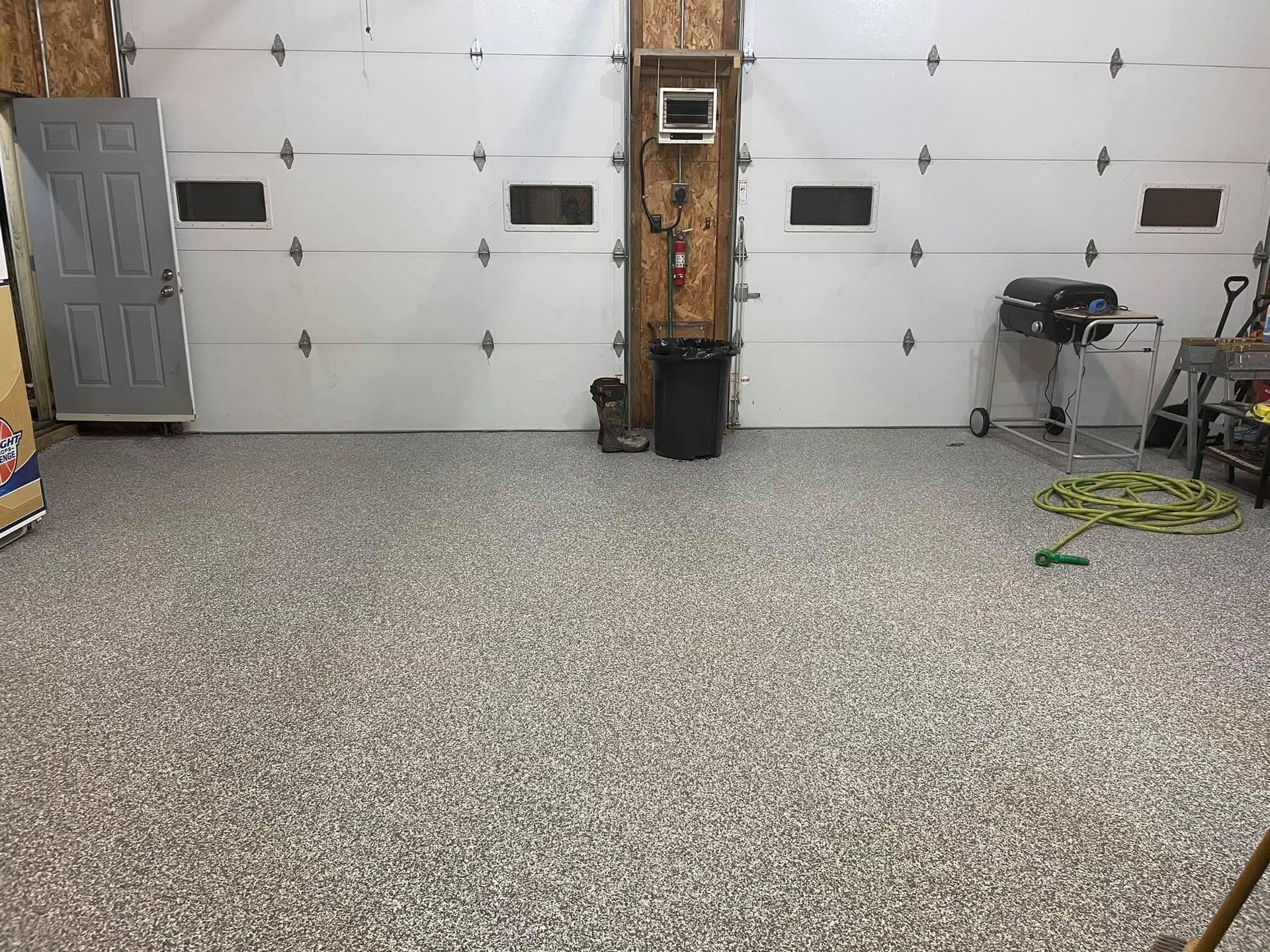
Once the coating cures, you'll see a glossy, slip-resistant surface that sheds water and resists staining from oil, antifreeze, and road salt tracked in during winter months. The floor stays intact where tires make constant contact, the finish doesn't fade or yellow in areas exposed to sunlight, and the surface cleans easily without requiring harsh chemicals or scrubbing that damages the coating.
The fast cure time means less downtime—garages can return to use within a day or two instead of a week, and commercial spaces don't have to shut down operations for extended periods while coatings dry. Polyaspartic systems also install in a wider temperature range than epoxy, which matters when you're working in unheated spaces during shoulder seasons.
Questions Before Starting Your Project
Clients considering polyaspartic coatings want to know how the systems compare to epoxy, how long installation takes, and what kind of durability they can expect.
How does polyaspartic differ from standard epoxy coatings?
Polyaspartic cures faster, resists UV degradation without yellowing, and handles temperature swings and chemical exposure better than epoxy—it's a more durable system for floors that see heavy use or seasonal conditions.
How long before a polyaspartic floor can handle vehicle traffic?
Most polyaspartic systems cure enough for light foot traffic within 12 to 24 hours and can handle vehicle traffic within 24 to 48 hours, compared to epoxy systems that may require several days or longer depending on temperature.
What surface prep is required before applying polyaspartic coatings?
The concrete is ground to remove contaminants, open the surface pores, and create a profile for proper adhesion, and moisture testing is performed to confirm vapor pressure won't cause delamination after the coating is applied.
Can polyaspartic coatings be applied in cold weather?
Polyaspartic systems tolerate a wider temperature range during installation than epoxy, which makes them practical for unheated garages and commercial spaces where temperature control isn't feasible.
What kind of maintenance does a polyaspartic floor require?
The floor can be cleaned with standard cleaning products without damaging the coating, and the surface resists staining and abrasion well enough that routine maintenance involves sweeping and occasional mopping rather than aggressive scrubbing or recoating.
West Concrete installs polyaspartic flooring systems across Orion and the Quad Cities for property owners who need durable, fast-cure coatings that hold up to heavy use and chemical exposure. Schedule a consultation to review your floor's condition and discuss coating options.