
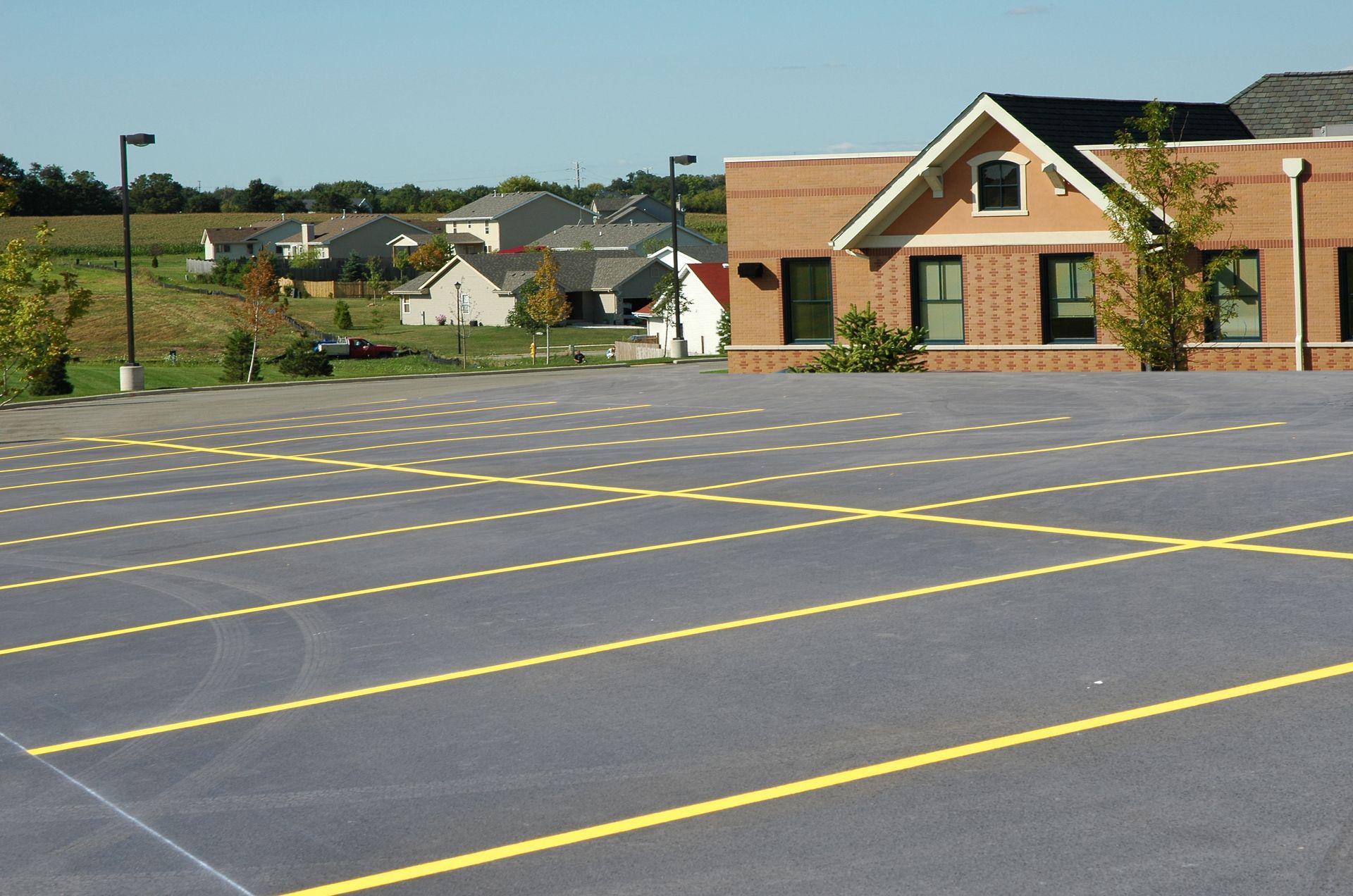
Commercial Surfaces Designed for Heavy Traffic
Parking Lots in Orion for businesses requiring durable concrete that withstands vehicle loads and Illinois freeze-thaw cycles
Commercial parking lots in Illinois take a beating from freeze-thaw cycling, salt exposure during winter months, and constant vehicle traffic that tests every inch of the surface. West Concrete builds concrete parking lots for Orion and Quad Cities businesses, engineered to handle these conditions without edge spalling or surface deterioration in the first few seasons. You'll see the difference in how the concrete holds up when plows scrape across it in January and how edges stay intact where cars pull in and out daily.
The installation process starts with a compacted gravel base, followed by a 5 to 6 inch concrete slab reinforced with wire mesh or rebar to distribute vehicle weight across the entire surface. Control joints are cut every 8 to 10 feet to manage where cracking occurs as the concrete cures, and dowel bars are installed at perimeter edges to prevent differential heave—when one section of concrete lifts while the adjacent section stays put, creating a trip hazard or drainage problem.
Arrange an on-site consultation to assess your property's base conditions and traffic patterns.
Why Proper Design Works for Commercial Use
Parking lot concrete needs to account for more than just the weight of vehicles—it also has to manage water runoff, resist salt damage, and maintain a level surface through years of seasonal ground movement. The base is compacted to prevent settling, the concrete mix includes air entrainment to resist freeze-thaw damage, and the surface is finished with a slight slope to move water toward drains or permeable edges.
After installation, your parking lot will drain properly after rain or snowmelt, edges will stay intact where vehicles enter and exit, and the surface will resist the cracking and spalling that shows up in poorly designed lots within a few winters. Control joints prevent random cracking, and the reinforcement keeps the slab from separating where heavy loads concentrate.
The thickness and reinforcement approach depends on what kind of traffic the lot will see—delivery trucks require heavier slabs than passenger vehicles, and high-turnover areas near building entrances need additional reinforcement to handle constant wear. These details get worked out during the design phase, not after the concrete is already poured.
What Property Owners Usually Ask
Business owners planning parking lot installations typically want to know about durability, drainage, and how the work affects their operations.
How thick does commercial parking lot concrete need to be?
Most parking lots use a 5 to 6 inch slab with reinforcing mesh or rebar, but thickness increases if the lot will see heavy truck traffic or delivery vehicles on a regular basis.
What prevents edges from breaking down where cars enter the lot?
Dowel bars are installed at perimeter edges to lock adjacent sections together, which prevents one section from lifting while the other settles—a common cause of edge spalling and cracking.
How is water managed in a concrete parking lot?
The surface is sloped during installation to direct water toward drains or permeable edges, and control joints are positioned to prevent water from pooling in low spots where it can freeze and damage the concrete.
How long before the parking lot can handle vehicle traffic?
Concrete reaches functional strength in about seven days under normal conditions, but full cure takes closer to 28 days—most lots can handle light traffic sooner, but heavy loads should wait until the concrete has fully cured.
What causes parking lots to crack in Orion's climate?
Freeze-thaw cycling is the primary culprit—water seeps into the concrete, freezes, expands, and creates internal pressure that leads to cracking and spalling if the mix doesn't include proper air entrainment and the base isn't adequately compacted.
West Concrete installs parking lots across Orion and the Quad Cities that meet commercial durability standards and hold up to the traffic and weather conditions these surfaces face year-round. Request a free estimate based on your lot size and expected traffic volume.