
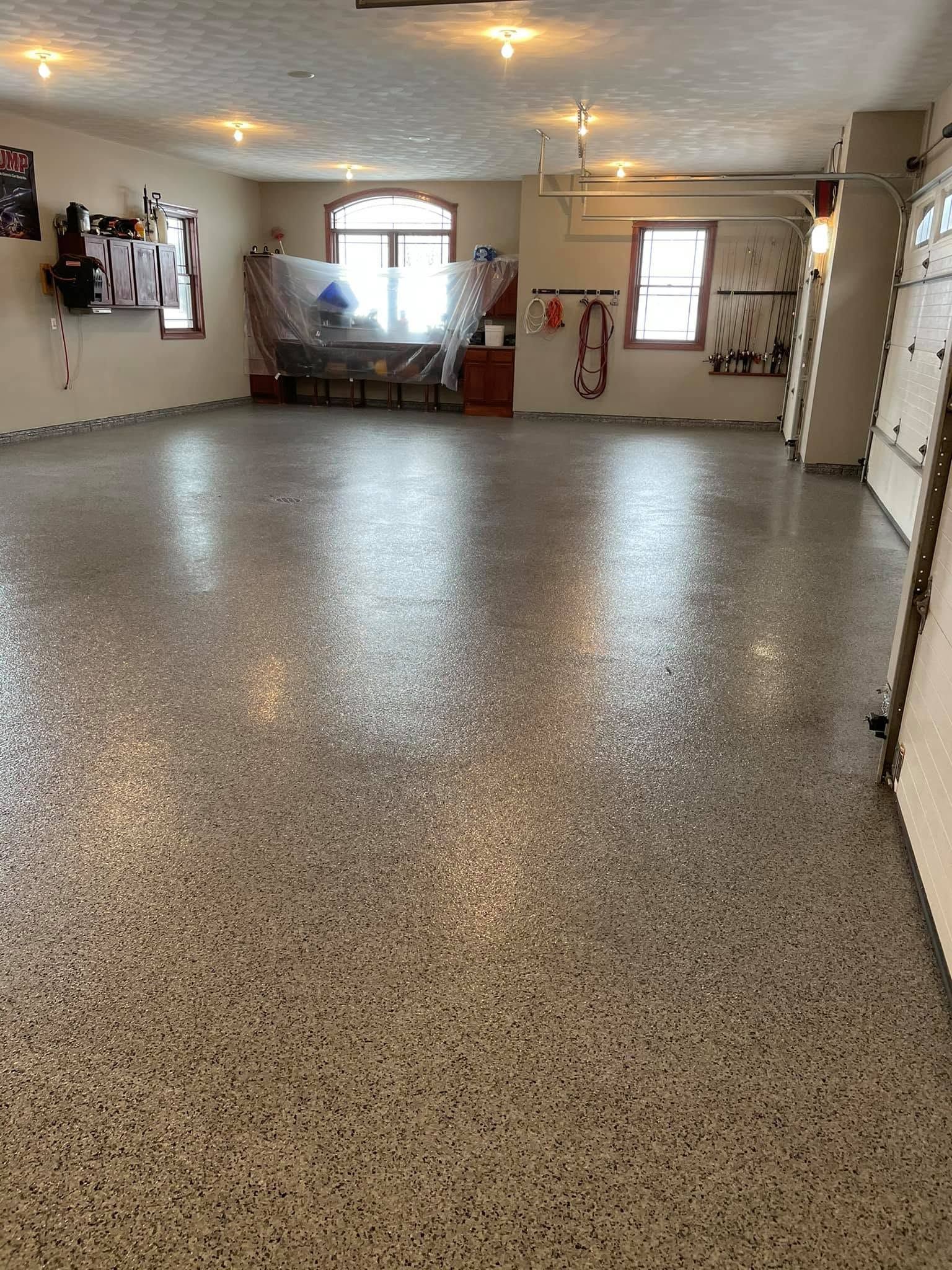
Floors That Handle Real Workshop Use
Garage Floor Concrete in Orion for homes and shops that store vehicles, tools, and heavy equipment
West Concrete pours and finishes garage floors designed to handle vehicle loads, resist oil and chemical exposure, and last decades under the demanding conditions typical in Orion workshops and garages. The freeze-thaw cycling common in Illinois winters causes unprotected slabs to crack and spall within just a few seasons, particularly when road salt and de-icing chemicals track in on tires and boots. Proper air entrainment mixed into the concrete—combined with a penetrating sealer applied after the slab cures—prevents moisture from infiltrating the surface and extends the floor's service life by twenty years or more.
The pour itself involves a four to six inch thick slab reinforced with welded wire mesh or rebar, graded with a slight slope toward the door opening to allow water and melted snow to drain rather than pool. The finish can be troweled smooth for a clean look or broom-textured for better traction when the surface is wet, depending on how the space will be used.
Schedule a site visit to review your garage dimensions and discuss the finish options that match your intended use.
What Proper Garage Floor Installation Requires
The subgrade underneath the slab must be compacted thoroughly and covered with a gravel base that drains groundwater away from the concrete. Without this preparation, settling soil causes low spots where water collects, and moisture wicking up through the slab leads to surface deterioration and efflorescence—the white powdery residue that signals mineral migration from below.
Once the concrete cures and any bleed water evaporates, a penetrating sealer soaks into the surface pores and hardens the top layer against abrasion, oil staining, and freeze-thaw damage. You'll notice that spills from automotive fluids wipe up more easily, tire marks stay minimal, and the surface resists the pitting and flaking that unprotected slabs develop after a few Illinois winters. The slope built into the pour directs snowmelt and wash water toward the overhead door, so the floor dries faster and stays cleaner between uses.
West Concrete uses rebar or mesh reinforcement appropriate to the slab thickness and anticipated load—heavier equipment or frequent vehicle traffic calls for upgraded steel placement to prevent cracking under point loads. The finish texture you choose affects both appearance and safety, so discussing how you'll use the space helps determine whether a smooth trowel finish or a slip-resistant broom texture makes more sense for your situation.
What Property Owners Usually Ask
Questions about garage floor work tend to focus on preparation steps, finish options, and how to protect the slab over time.
What thickness works for a standard two-car garage?
A four-inch slab with wire mesh handles most residential vehicle loads, but if you're parking a lifted truck, storing a boat, or running a home workshop with heavy machinery, a six-inch slab with rebar reinforcement prevents stress cracks and settling under concentrated weight.
How long before I can drive on the new floor?
The concrete needs at least seven days to cure before vehicle traffic, though light foot traffic is safe after 24 hours; full strength develops over 28 days, so avoid parking heavy equipment or placing loaded shelving during that initial month.
Why does freeze-thaw damage happen in Orion garages?
Illinois winters cycle above and below freezing repeatedly, and when moisture trapped in the concrete expands during freezing, it creates internal pressure that chips and cracks the surface—air entrainment introduces microscopic bubbles that absorb this expansion and prevent spalling.
What does the sealer actually do?
Penetrating sealer soaks into the concrete surface and chemically reacts to harden the top layer, which closes pores that would otherwise absorb oil, water, and salts tracked in from winter roads—this keeps stains shallow and prevents corrosive chemicals from reaching the reinforcement steel.
Can the floor be sloped if the lot is flat?
The slope is built into the slab during the pour by adjusting formwork and screed height, so even on a level building pad, the finished concrete can drain toward the garage door at the recommended eighth-inch drop per foot without affecting how vehicles sit or how shelving stands.
West Concrete handles garage floor installations for residential and light commercial properties across Orion and the Quad Cities, using air-entrained mixes and proper drainage slopes to meet Illinois freeze-thaw conditions. Request a detailed estimate based on your garage size and the finish options that fit how you plan to use the space.