
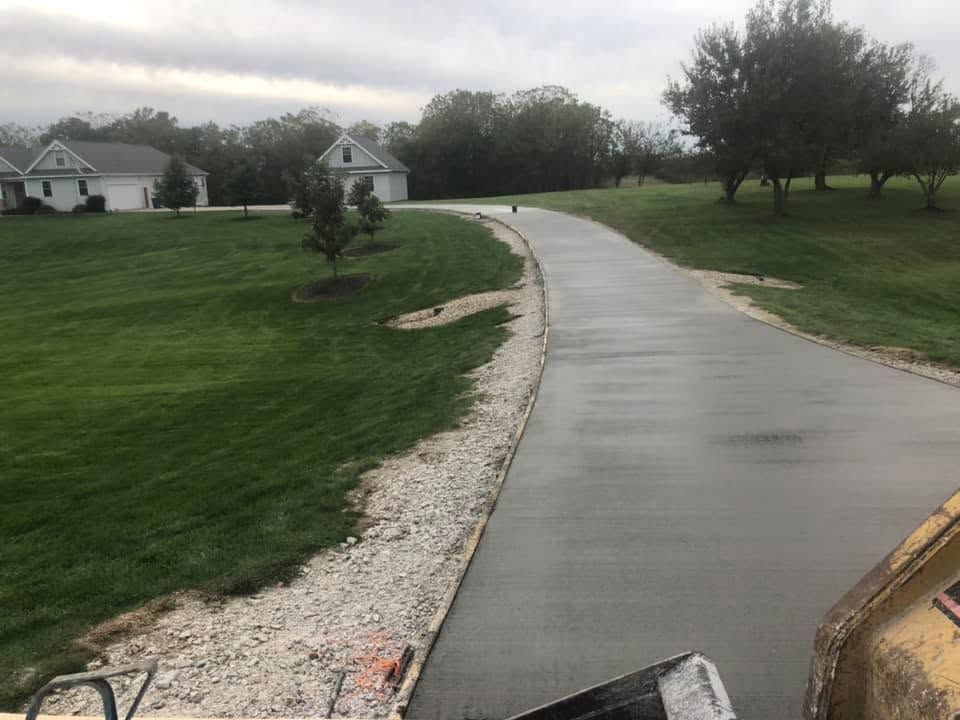
Code-Compliant Walkways for Safe Access
Sidewalks in Orion for properties where ADA compliance and municipal codes require specific thickness, slope, and durability standards
Illinois municipal codes enforce sidewalk width, thickness, and cross-slope requirements to meet ADA accessibility standards and handle freeze-thaw conditions without heaving or cracking. West Concrete installs four-inch reinforced concrete sidewalks in Orion and the Quad Cities, meeting local building codes and creating walkways that drain properly and resist seasonal weather. Control joints are placed every four to five feet to manage thermal expansion and contraction, preventing random cracks from forming across the walking surface.
The slab is poured with a one-eighth inch per foot cross-slope that directs water off the walking surface without creating a noticeable tilt underfoot. Reinforcement—either wire mesh or rebar—is embedded in the concrete to add tensile strength and reduce the risk of cracking at stress points where tree roots or settling soil create pressure.
Schedule a property review to confirm code requirements and discuss your sidewalk layout.
Why Sidewalk Installation Requires Specific Standards
Code compliance dictates slab thickness, cross-slope, and control joint spacing to create walkways that are safe, accessible, and durable. The cross-slope prevents water from pooling on the surface while remaining gentle enough to meet ADA requirements for wheelchair access. Control joints are spaced based on slab width and environmental conditions, directing cracks to occur along planned lines rather than randomly across the walking path.
Once the sidewalk is installed, water runs off the surface instead of creating puddles or icy patches in winter. The slab remains level without heaving at the edges or sinking in the middle, and control joints stay clean and functional without developing trip hazards. The surface resists flaking and spalling even after repeated exposure to deicing salt and freeze-thaw cycles.
Sidewalk work includes base preparation, reinforcement, and code-compliant finishing, but decorative borders or colored concrete are separate options. Tree root barriers may be recommended in areas where existing vegetation threatens future slab stability, and the timing of the pour affects cure time and final strength.
Answers to Frequent Sidewalk Questions
Property owners in Orion often ask about code compliance, durability, and what makes sidewalk installation different from other flatwork.
What thickness is required for residential sidewalks?
Most municipal codes require four-inch concrete for residential sidewalks to support foot traffic and resist cracking from freeze-thaw cycles and ground movement.
How does cross-slope affect sidewalk performance?
A one-eighth inch per foot cross-slope directs water off the walking surface without being noticeable underfoot, preventing ice buildup and meeting ADA accessibility standards.
Why are control joints necessary in sidewalk slabs?
Control joints manage thermal expansion and contraction, directing cracks to occur along planned lines rather than randomly across the walking surface where they create trip hazards.
What happens if sidewalks don't meet ADA slope requirements in Orion?
Non-compliant sidewalks can create accessibility barriers and may need to be removed and replaced to meet municipal inspection standards, especially for commercial properties or public walkways.
How long before a new sidewalk can handle foot traffic?
Light foot traffic is safe within a few days, but full pedestrian loads and heavy equipment should wait until the concrete has cured for at least seven days to avoid surface damage.
West Concrete installs code-compliant sidewalks for residential and commercial properties throughout the Quad Cities, using reinforced concrete and control joint spacing designed for local freeze-thaw conditions. Reach out to discuss your sidewalk project and receive an estimate based on your property's specific requirements.