
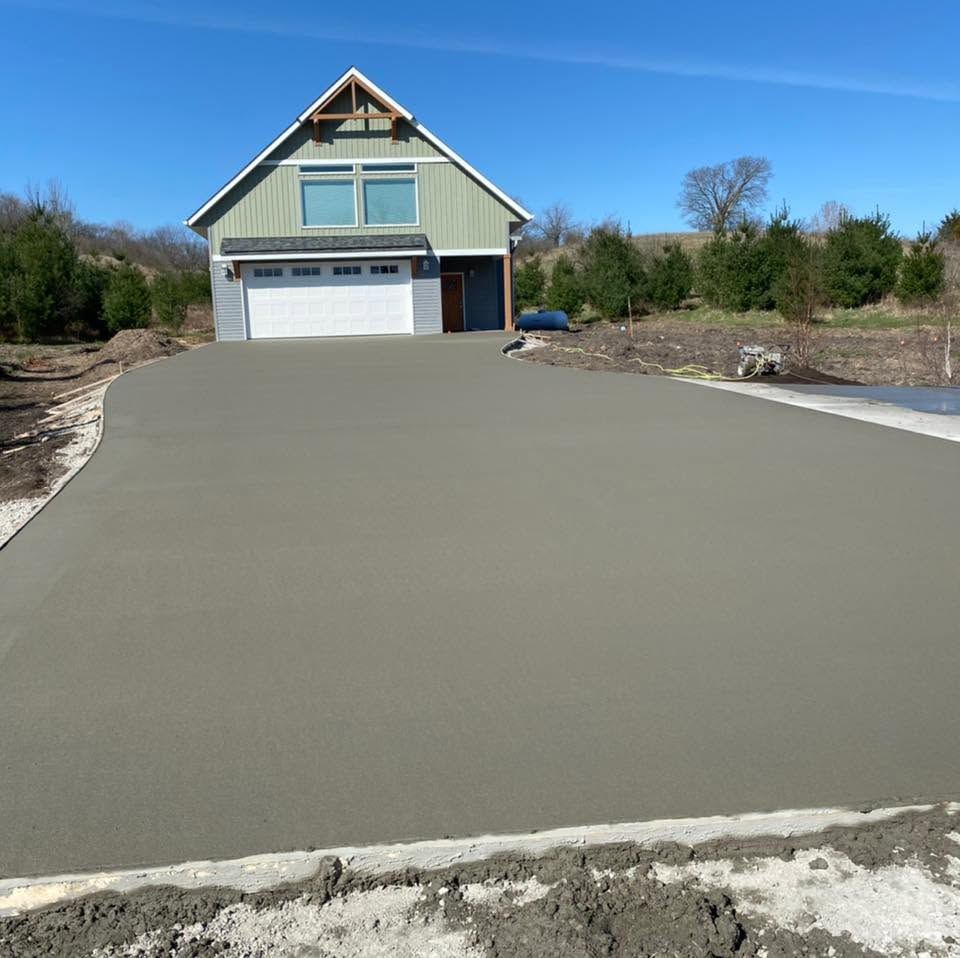
Driveways That Handle Salt and Seasonal Loads
Driveways in Orion for properties where vehicle weight and winter exposure demand concrete built to resist cracking and surface damage
Driveways in the Quad Cities face salt exposure, freeze-thaw stress, and the weight of vehicles turning and braking on the same surface for years. West Concrete pours concrete driveways in Orion engineered to handle those conditions without premature cracking or scaling. The work starts with a properly compacted gravel base, followed by a four-to-six-inch concrete bed mixed with air entrainment to resist moisture penetration and seasonal temperature swings.
Control joints are spaced every eight to ten feet, creating planned breaks that manage thermal expansion and contraction as the driveway heats up in summer and contracts during winter cold snaps. After the concrete cures, a seal coat is applied to block salt and moisture from penetrating the surface, which extends the driveway's life and keeps the finish looking clean.
Arrange an estimate to review your driveway layout and discuss base preparation and finishing options.
How Driveways Address Vehicle Loads and Weather
Base preparation involves removing unstable soil, adding compacted gravel, and grading for proper drainage before the pour. The concrete mix includes air entrainment, which creates microscopic voids that allow trapped water to expand during freezing without damaging the slab. Thickness is determined by expected vehicle weight and turning radius, with heavier trucks requiring a thicker bed than standard passenger cars.
Once the driveway is finished and sealed, you'll notice tire marks wash off easily and water beads on the surface instead of soaking in. The slab stays level without settling or heaving at the edges, and control joints prevent random cracks from forming across high-traffic areas. The seal coat resists road salt and oil stains, keeping the surface functional and visually clean season after season.
The installation includes grading and base work, but decorative finishes like stamping or coloring are separate upgrades. Seal coat reapplication is recommended every few years depending on salt exposure and traffic intensity, and the timing of the pour affects cure time—cooler weather slows the process but produces stronger concrete.
Common Questions About Driveway Concrete
Homeowners replacing or installing driveways in Orion typically ask about durability, cost factors, and what affects the final outcome.
How thick should a residential driveway be?
Most residential driveways are poured at four inches thick, but properties with heavy trucks or RVs may require six inches to handle the additional load without cracking.
Why is base preparation critical for driveway longevity?
A poorly compacted base allows the slab to settle unevenly, creating low spots where water pools and freeze-thaw damage accelerates, shortening the driveway's usable life.
What does seal coating do for a concrete driveway?
Seal coats block moisture and salt from penetrating the concrete, reducing freeze-thaw damage and preventing surface scaling that makes driveways look worn and pitted.
When is the best time to pour a driveway in Illinois?
Spring and fall offer moderate temperatures that support proper curing without the extreme heat of summer or the freezing risk of winter, though driveways can be poured year-round with proper precautions.
How long before I can park on a new driveway?
You can walk on the surface within a few days, but wait at least seven days before parking vehicles to avoid tire indentations and surface damage during the curing process.
West Concrete installs driveways for homeowners across the Quad Cities, using air-entrained mixes and control joint spacing designed for local weather conditions. Contact our office to schedule a property visit and receive a project estimate based on your driveway dimensions and site requirements.