
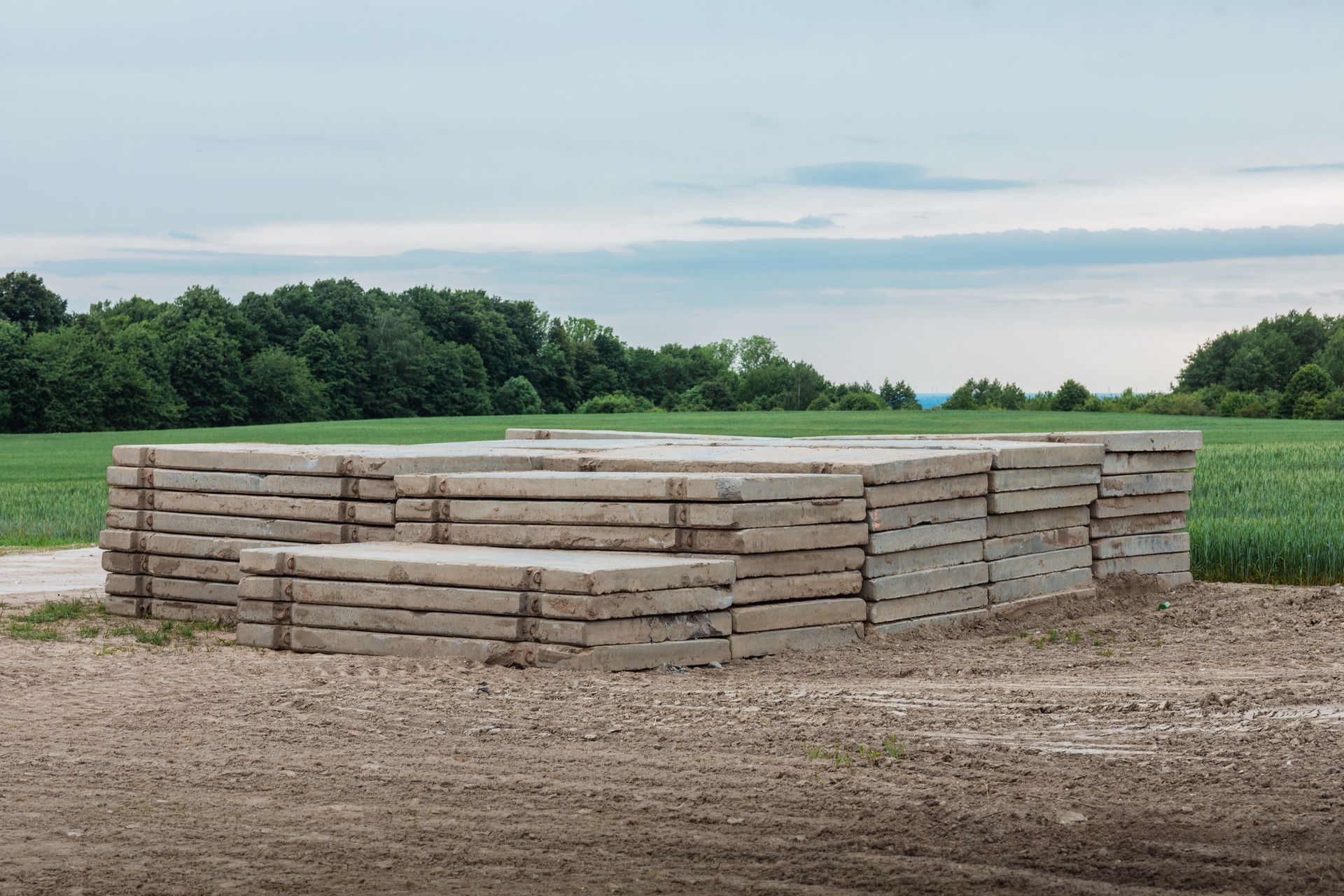
Slabs Built for Agricultural Loads
Farm Concrete in Orion for equipment pads, feed areas, and agricultural infrastructure
Grain bins, livestock structures, and heavy farm equipment concentrate thousands of pounds onto small footprints, and standard residential concrete specs fail under those loads within a few seasons. The slab cracks, settles unevenly, or develops low spots that collect water and accelerate freeze-thaw damage. West Concrete pours farm slabs designed with reinforcement patterns and thickness appropriate to the load calculations for your operation—so the pad stays level under grain bin weight, resists point loads from tractor tires and implement stands, and drains properly to prevent ice buildup and manure corrosion.
Heavy-duty farm pours use steel reinforcement placed to handle concentrated stress, and the mix includes air entrainment that protects against Illinois freeze-thaw cycles. The slab is graded during the pour to shed water toward field edges or drainage swales, which keeps the surface drier and extends longevity in high-traffic areas where moisture and organic material would otherwise degrade unprotected concrete.
Request a site evaluation to review your equipment storage and operational needs so the slab design matches the loads and drainage conditions specific to your farm.
How Farm Concrete Handles Rural Demands
Grade preparation and compaction matter more on farm sites than residential pours because uneven settling under heavy loads creates dangerous trip hazards and equipment instability—a grain bin that shifts even slightly can bind doors, stress walls, and create structural failures. The gravel base must extend beyond the slab edges and be compacted to density standards that prevent compression over time, even when saturated during spring thaw or heavy rain events common in the Quad Cities.
After the concrete cures, you'll notice that equipment sits level, grain bins remain plumb, and the surface stays dry enough to walk safely during wet conditions. Water sheds off the slope rather than pooling in low spots where it would freeze, crack the surface, or create slippery mud around high-traffic zones. The reinforcement prevents the cracking that happens when point loads from tractor wheels, auger stands, or feed bunker posts concentrate stress on undersized or unreinforced slabs.
Farm operations often need pads poured in phases as budgets allow or equipment arrives, so West Concrete plans joint placement and reinforcement layout to accommodate future expansion without requiring removal or retrofit of existing sections. Livestock areas and feed slabs face additional challenges from manure acids and constant moisture, so the air-entrained mix and proper drainage slope become even more critical to prevent surface degradation and premature replacement.
Common Questions About This Service
Farmers and rural property owners typically ask about load capacity, timing around planting and harvest schedules, and how to protect concrete from agricultural chemicals and weather.
What thickness and reinforcement does a grain bin pad need?
Load calculations depend on bin diameter and capacity, but most installations use at least six inches of concrete with rebar grid reinforcement sized to the bin's footprint and fill weight—undersized pads crack radially from the center as grain weight compresses the slab.
How does freeze-thaw cycling affect farm concrete in Orion?
Illinois winters repeatedly freeze and thaw moisture trapped in concrete, and without air entrainment, that expansion chips and scales the surface—rural slabs also face longer exposure to standing water and organic material, which accelerates deterioration if the mix isn't designed for durability.
Can the pour happen during planting or harvest season?
Concrete needs stable temperatures above 50 degrees for proper curing, so spring and fall pours are possible if the forecast cooperates; scheduling around field work and equipment access is part of planning the job to avoid interfering with your operation.
Why does drainage slope matter for equipment pads?
Standing water on farm slabs creates ice hazards in winter, promotes algae and slime growth in warmer months, and accelerates freeze-thaw damage that cracks and spalls the surface—a controlled slope moves water off the pad so it dries faster and lasts longer.
How long before I can drive equipment on the new slab?
Light tractor traffic is safe after seven days, but avoid parking loaded grain carts, placing full bins, or running heavy implements until the concrete reaches full strength at 28 days—early loading can cause permanent cracking and settlement.
West Concrete works with agricultural operations across Orion and the surrounding Quad Cities region, designing pads and slabs that handle farm equipment loads and rural weather conditions. Call (309) 781-8671 to discuss your project timeline and get a detailed estimate based on your specific load and site requirements.